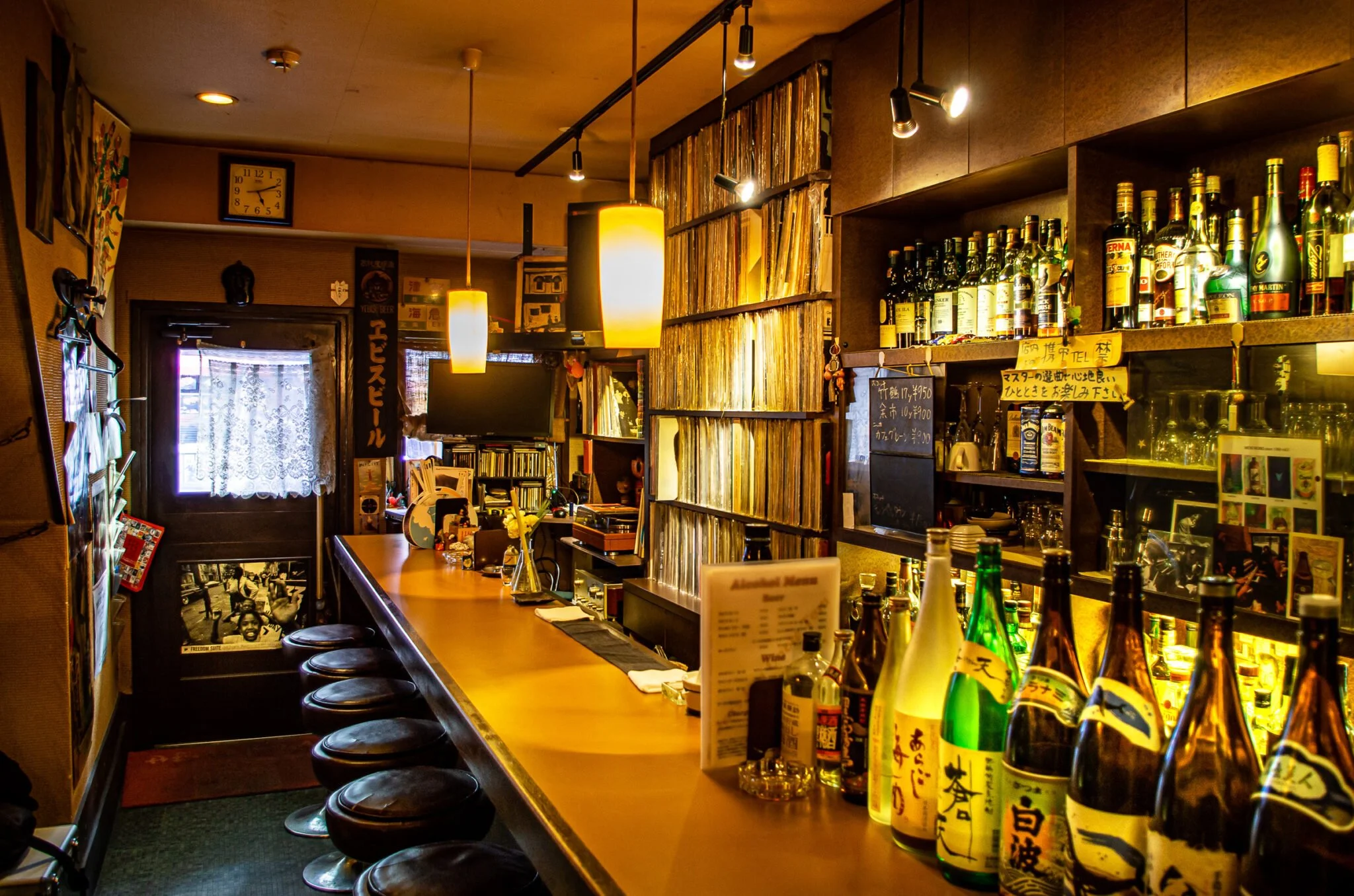
Jazz Inn Uncle Tom, found in 1977 in Tokyo, Japan
The first time you sit in a jazz kissa, you notice what's missing. No one is talking over the music. No one is checking a phone. The record playing is the reason everyone is in the room, and for the length of a full side, that's enough.
Kissa is short for kissaten, the Japanese word for coffee shop. Attach "jazz" to it and you get something more specific: a cafe built around recorded music instead of conversation. The idea took shape in Japan in the late 1920s, when a handful of cafe owners started installing phonographs and treating records as the main event rather than background noise. The tradition really took hold after World War II, when imported jazz LPs were scarce and expensive, and most people couldn't afford a stereo capable of doing them justice. The kissa filled that gap. You paid for a coffee, sat down, and got access to records and a sound system you had no other way of hearing.
By the 1960s and 70s, Tokyo and Osaka had hundreds of these rooms, each with its own personality. Some leaned bebop, some modal jazz, some free improvisation. The owners acted less like baristas and more like curators, programming sets the way a DJ builds a night. Regulars didn't just hear the records, they studied them, returning to the same room for years to sit with the same collection and the same speakers. A few of the originals are still running. Most closed as home stereo systems got better and cheaper, and the reason for the room started to disappear.
Why the Idea Still Works
What made the jazz kissa work wasn't the coffee or even the jazz specifically. It was the agreement everyone in the room made without saying it out loud: we are here to listen, not to fill silence. That's a harder thing to find now than it was in 1960s Tokyo, not because good stereos are rare, but because full attention is. Most of us own the equipment to listen well and rarely use it that way. The record spins while we do something else.
A listening room brings back the constraint. One system, one set of speakers built to be heard rather than glanced at, a host who's actually chosen the records instead of handing you an algorithm. The kissa model translates because the problem it solved in postwar Japan, records without proper systems to play them on, has become a different problem, systems without the occasion to use them properly or places with systems that allow us to just… sit.
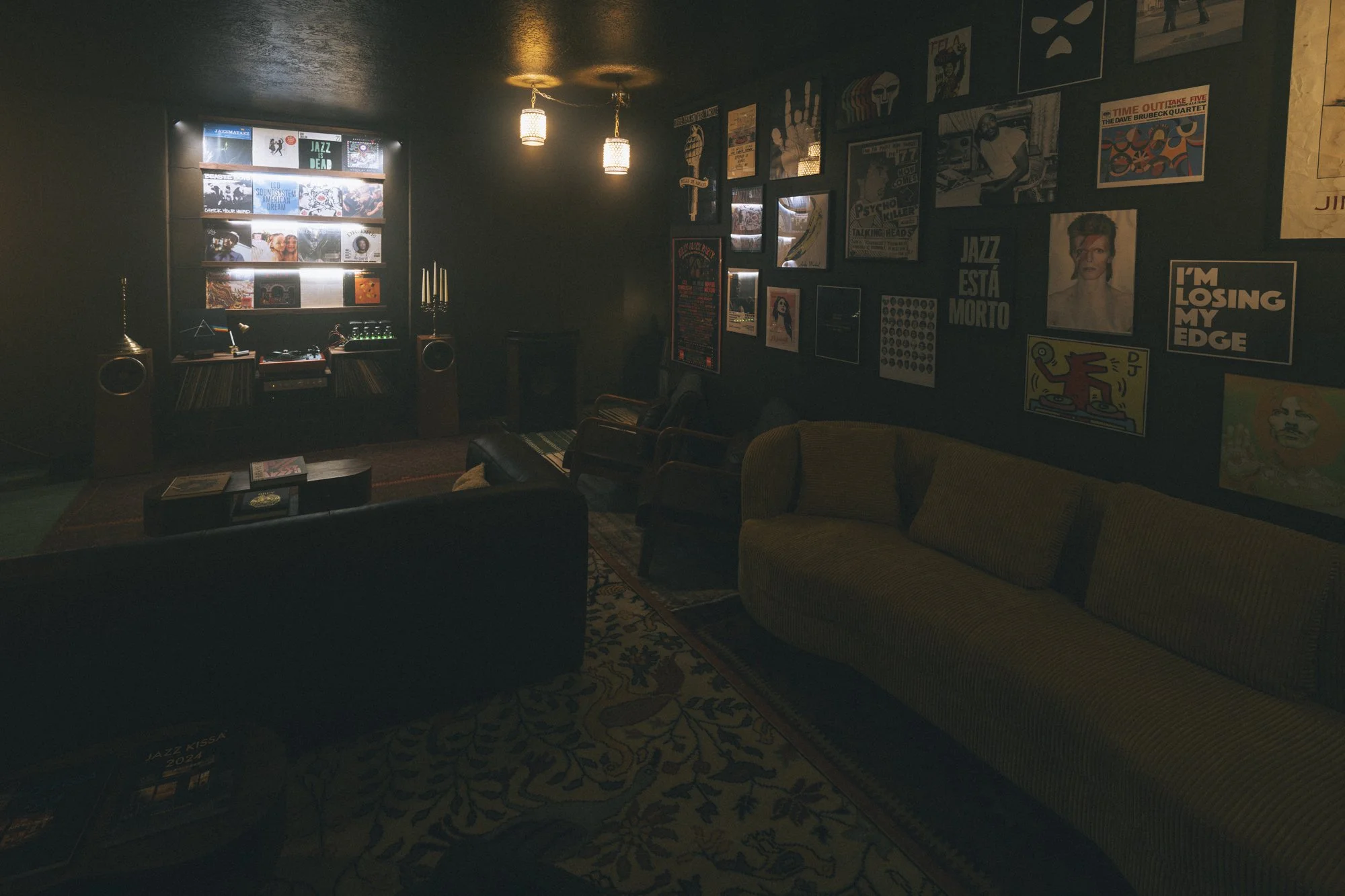
The Inside of B-Side HiFi
What This Means for B-Side in Provo
B-Side HiFi didn't try to reproduce a jazz kissa exactly. Provo isn't Shibuya, and we're not claiming a lineage we didn't earn. But the core idea traveled: build a room around a good analog stereo, program the records with intention, and let people sit with an album, all the way through, the way it was meant to be heard. That's the whole premise of the space, and we have started this blog to provide increase knowledge, share ideas, and inspire more people to truly tune in. The Liner Notes is where we'll write about records we play, the hosts who play them, and the music culture, in Provo and beyond, that a listening room like this belongs to. We are first and foremost a community. A place to rest. A place to connect.
B-Side HiFi is a dedicated HiFi listening room. If you haven't sat in the room yet, that's really the best way to understand what exactly we are bringing to the community. Reading about it gets you partway. The rest happens when the needle drops and nobody reaches for their phone.
Looking for something new to do in Provo? A full- album listening session is a different kind of night out. Try it once and you'll probably become a regular.
Curious what a night at B-Side actually looks like? Check our upcoming listening sessions and come experience it for yourself.